· General · 7 min read
What is Breaking Your Product's Traction? Positioning, Growth or Content
It comes down to one of three problems. This post breaks them down and ends with 5 questions that will tell you which one you are dealing with.
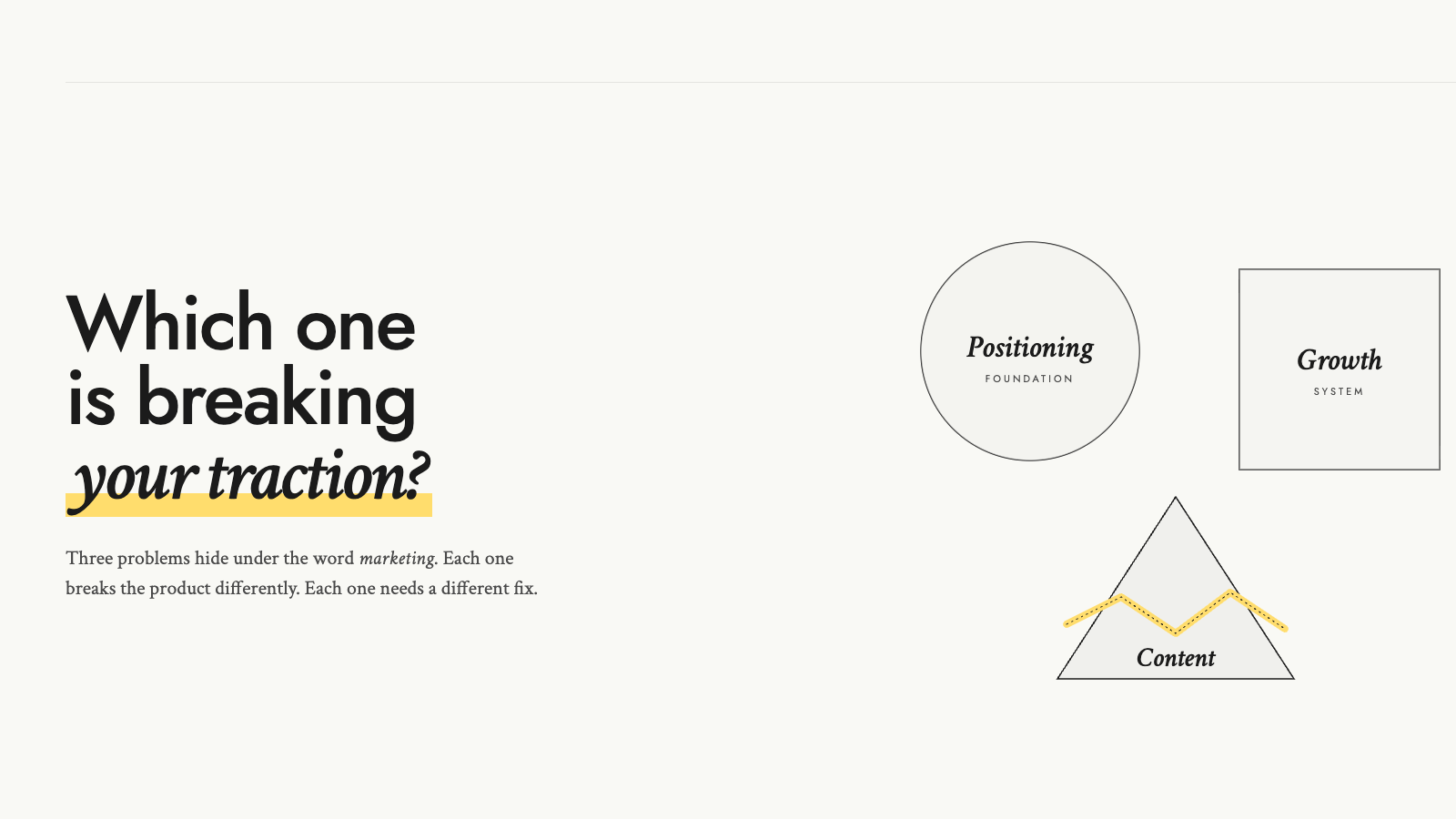
I have worked with different founding teams and the question that comes up most often is the same: the product is solid, the team has invested in marketing, and the results are not matching the effort. Why?
For some, it shows up at launch when the product goes live, the landing page gets traffic, and nobody converts. For others, it shows up later as early customers came in, the product proved itself, but growth plateaued and no amount of new hires or new channels moved the needle.
In other cases, the system is running and content is shipping consistently, but none of it is producing anything measurable.
The natural reaction is to blame the hire or the channel. But three different problems hide under the word “marketing”: positioning, growth, and content. Each one breaks your product differently depending on where you are, and each one needs a different fix.
In this post, I break down how each problem shows up, why they get confused for each other, and what it costs when the wrong one gets solved. At the end, five questions that will tell you which one is actually breaking your product’s traction.
The Positioning Problem
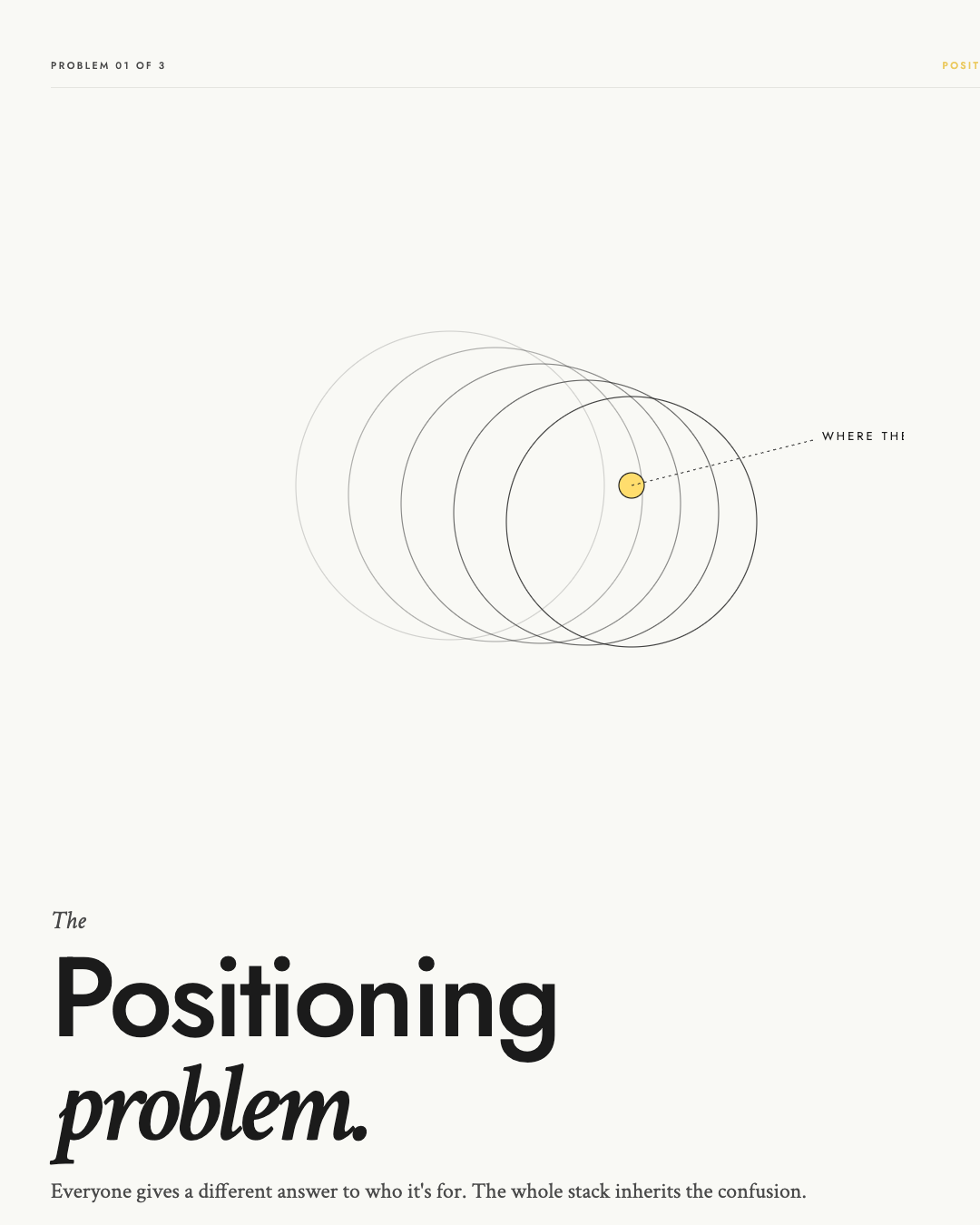
Positioning is the answer to three questions:
- Who is this product for?
- What does it replace?
- Why should the buyer care?
When those answers are not settled, everything built on top of them inherits the confusion, and the signs show up early.
The landing page reads like a feature list because nobody knows which feature matters most to which buyer. The founder describes the product differently depending on who is in the room, and marketing and content teams produce generic work because the brief itself had nothing specific to anchor to.
April Dunford calls this “default positioning,” where companies never deliberately define how the product should be framed and instead carry forward the assumptions they started with. Eventually the product evolves, the market shifts, and the positioning stays frozen at whatever was first imagined.
This is what causes channels to underperform and hires to underdeliver, and worse, the real issue stays hidden because everything looks like an execution problem.
Solving a positioning problem starts with pausing before spending to actually understand the buyer. That means answering questions like who they are, what they have tried before, what failed, and what language they use to describe the problem your product solves.
It is the kind of work that feels slow and gets skipped in favor of launching campaigns, but it is also the work that determines whether those campaigns have anything meaningful to say. Every channel decision, every hire, and every piece of content downstream depends on what this research surfaces.
The Growth Problem
The positioning is right, the team knows who the product is for, and when the right person lands on the page they get it. Early customers are coming in, the product is delivering on its promise, and the foundation is solid.
Now it is time to scale, and this is where growth becomes its own problem.
Scaling a product that is well-positioned requires coordinated effort across the right channels, with content, outreach, and conversion all working together as one system. When that coordination exists, each channel feeds the next, and results compound.
Content drives traffic, traffic enters a nurture sequence, the sequence produces qualified conversations, and those conversations close because the positioning already did the heavy lifting.
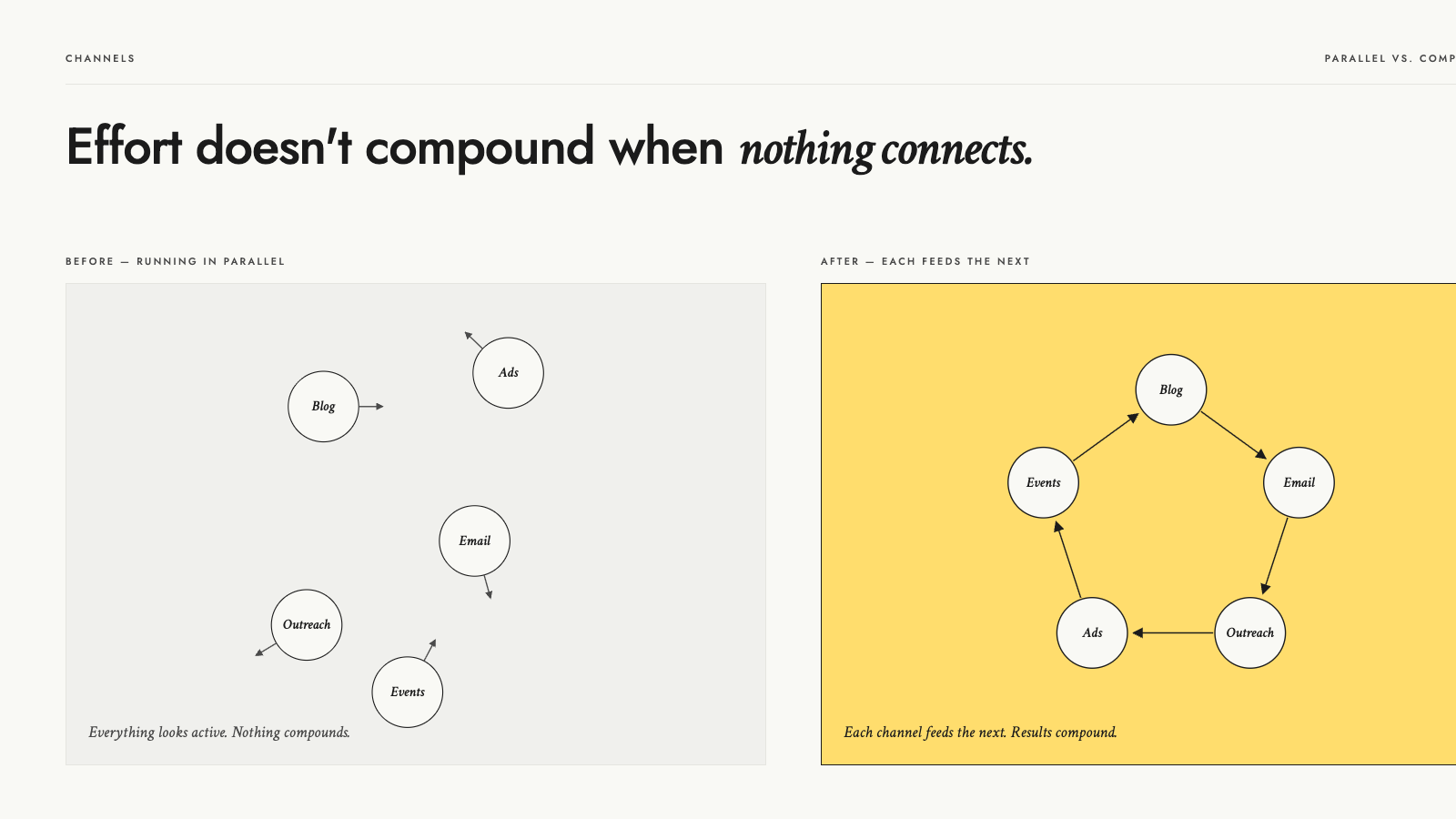
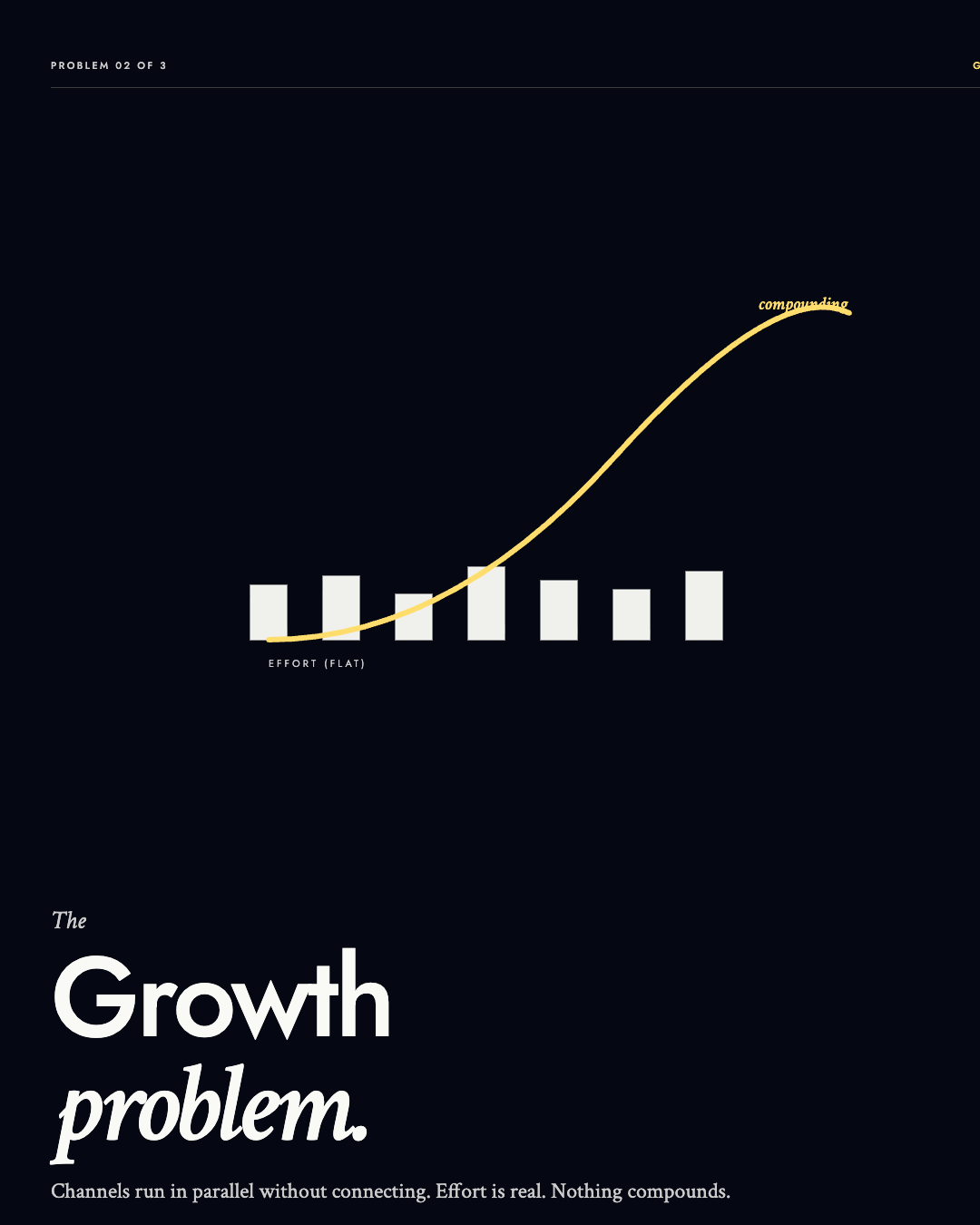
When that coordination does not exist, the same channels run in parallel without connecting to each other. The blog produces traffic that never turns into signups, the email sequences nurture leads that came from nowhere specific, and the outreach generates replies that the rest of the system is not built to convert.
Everything looks active, but nothing compounds.
The frustration is real because the individual pieces are often delivering on their own scope. The problem is not that anything is broken in isolation. It is that nothing is connected, and without that connection, effort does not translate into revenue no matter how much of it the team puts in.
Solving a growth problem means building that connection by diagnosing which channels fit the buyer, connecting them into a system where each one feeds the next, and measuring what compounds so you can cut what does not.
The Content Problem
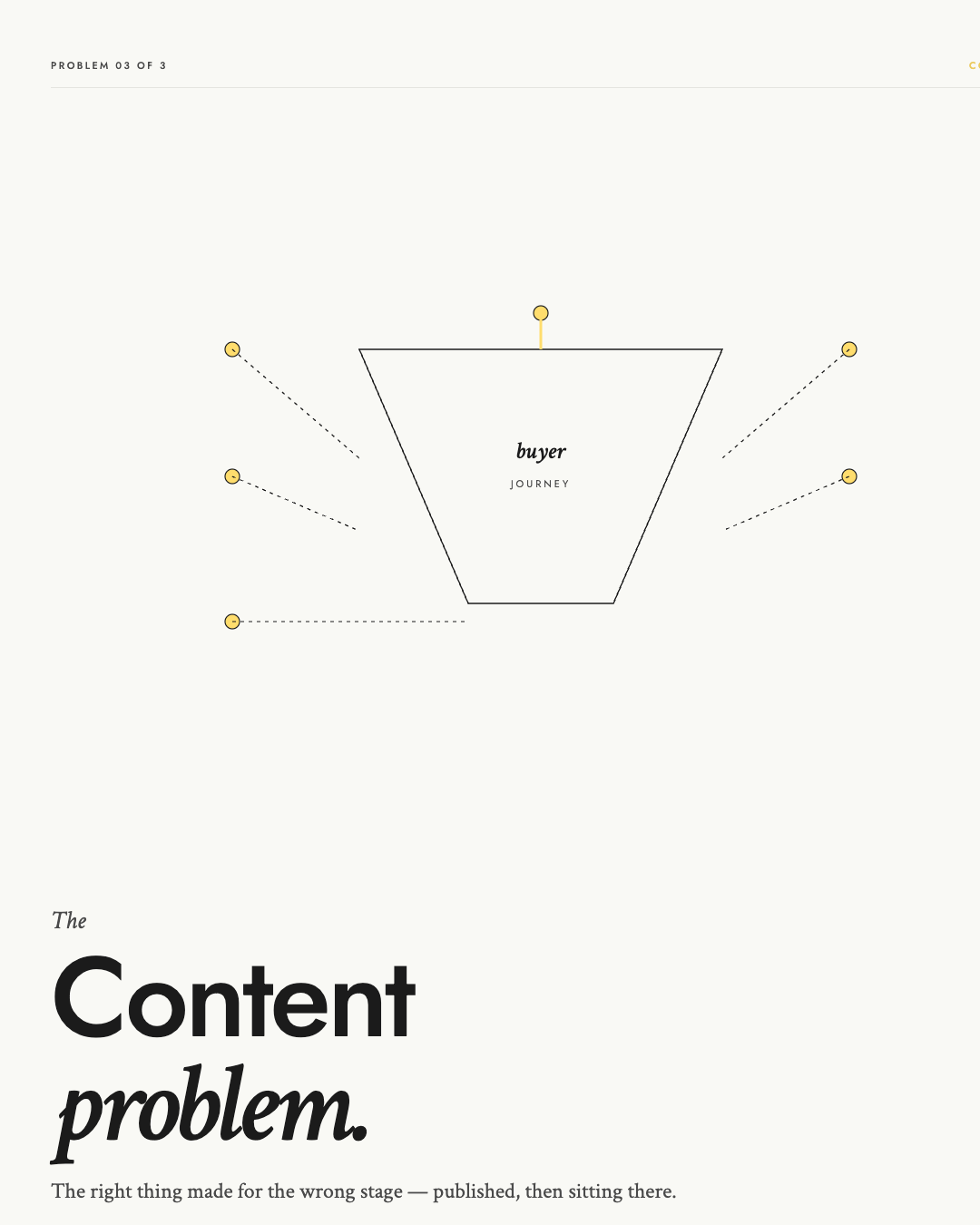
The channels are in place, the system is running, and content is being produced consistently. But the content is not mapped to how buyers actually move through their decision.
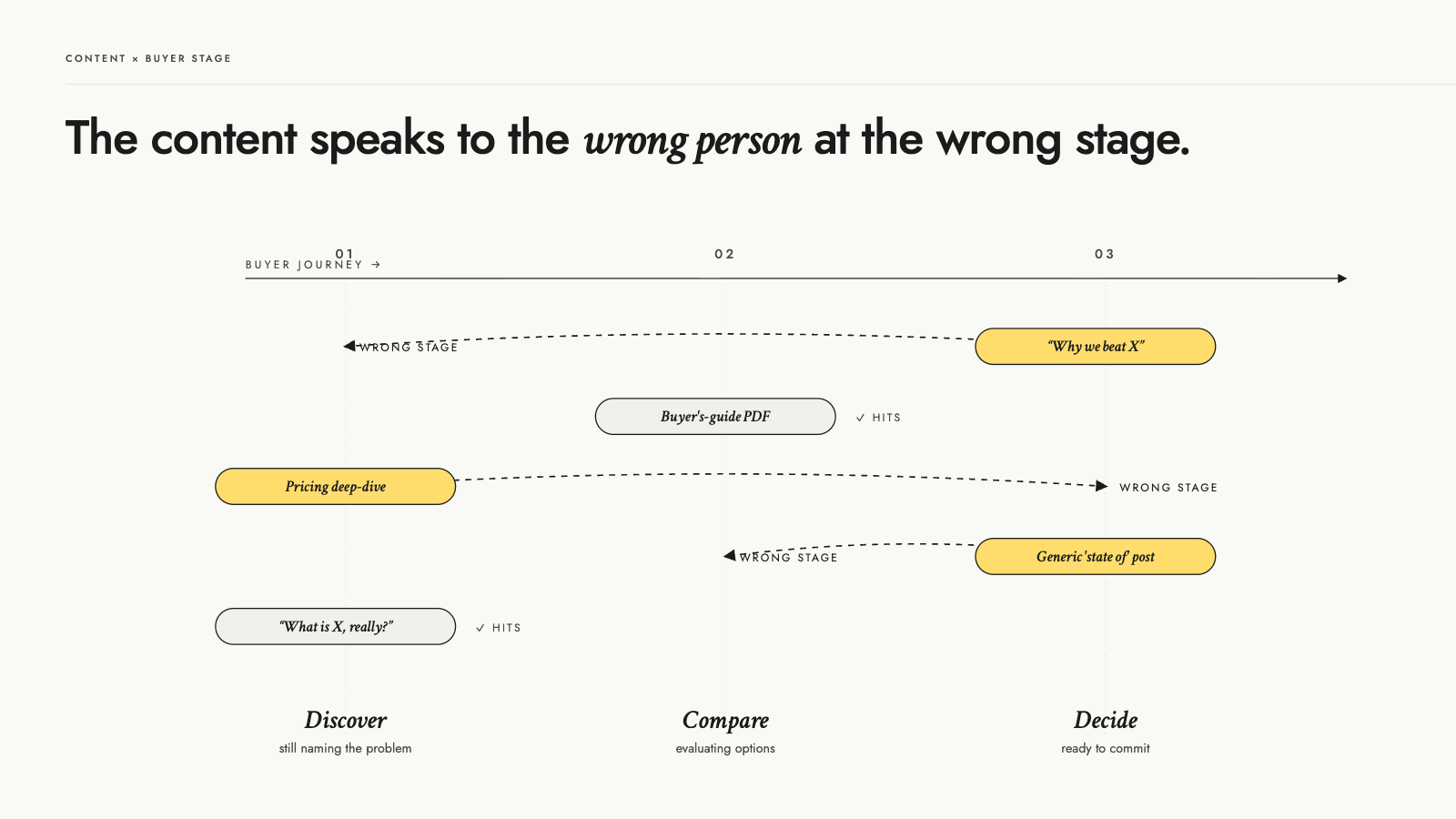
A buyer who just discovered the product and is still trying to understand the problem is receiving content that assumes they are ready to evaluate a solution. A buyer who is actively comparing options is getting broad educational material that could belong to any company in the space.
The content speaks to the wrong person at the wrong stage, and no amount of quality or consistency fixes that.
Even when the content is right, it often does not reach the people it was made for. It gets published and sits there because distribution was never built into the process, and nobody can trace a piece of content back to a conversation or a closed deal.
So the team keeps producing based on a calendar with no way of knowing what is working and what is not. When this runs long enough, the team concludes that content does not work for the business.
The real issue is that the connection between what gets created, who needs to see it, and when they need to see it was never made.
Why These Get Confused
All three problems produce the same visible symptom, which is that marketing is not working. The landing page is not converting, the content is not producing leads, and the pipeline is flat. From the inside, it all looks like one problem, and the instinct is to fix whatever feels most obvious.
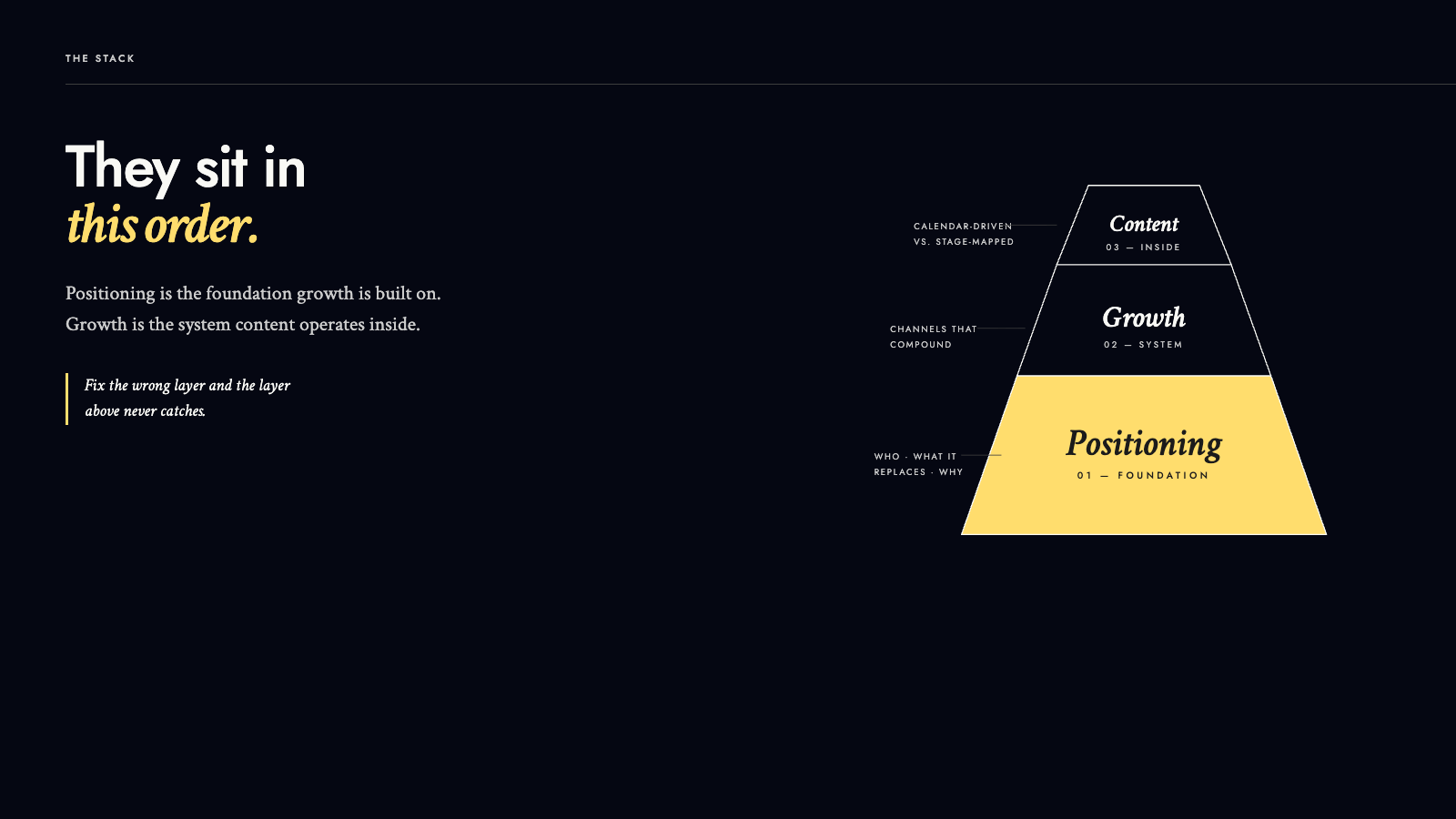
However, these three problems sit in a specific order, and that order matters.
Positioning is the foundation that growth is built on, and growth is the system that content operates inside. When positioning is broken and the team hires a content strategist, the content fails not because of the content but because the messaging underneath it has no foundation.
When growth infrastructure does not exist and the team invests in better content, the content improves but there is no system to carry it to the right people at the right time. The confusion happens because the fix for a downstream problem looks productive even when the upstream problem is unresolved.
Publishing content feels like progress, running campaigns feels like progress, hiring specialists feels like progress, and all of it can be progress, but only if the layer underneath is already in place.
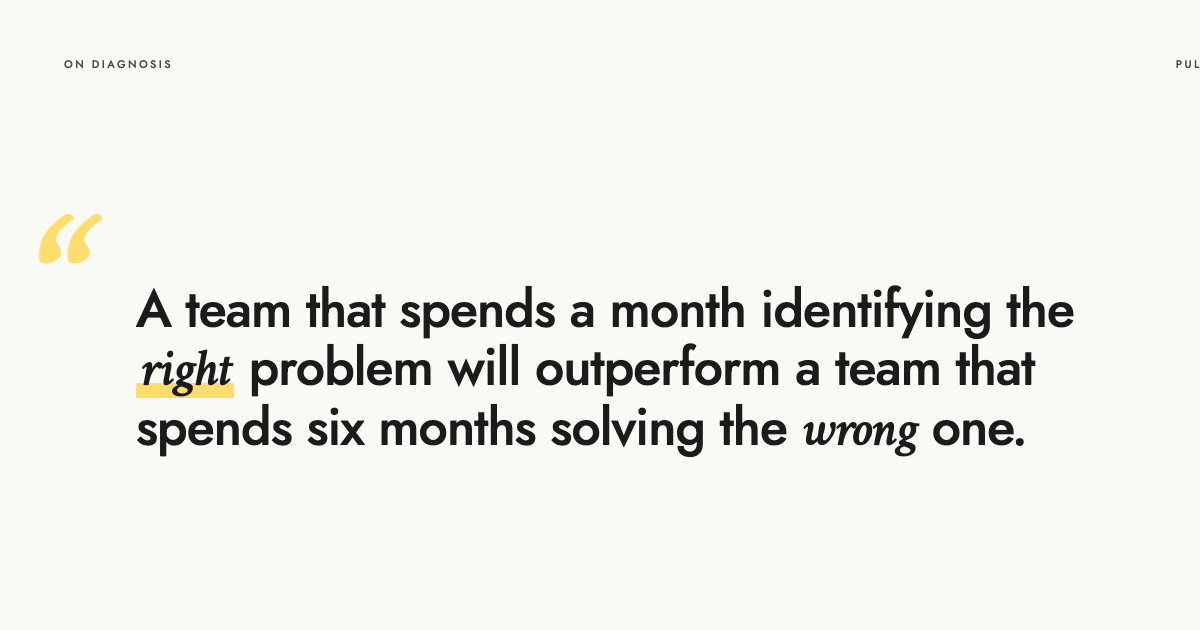
This is why diagnosis matters more than execution speed. A team that spends a month identifying the right problem will outperform a team that spends six months solving the wrong one, because every dollar and every hour spent on the wrong layer compounds in the wrong direction.
Five Questions to Find Out Which Problem You Have
These are questions I ask early in every engagement because the answers reveal where the real problem sits faster than any audit or strategy session.
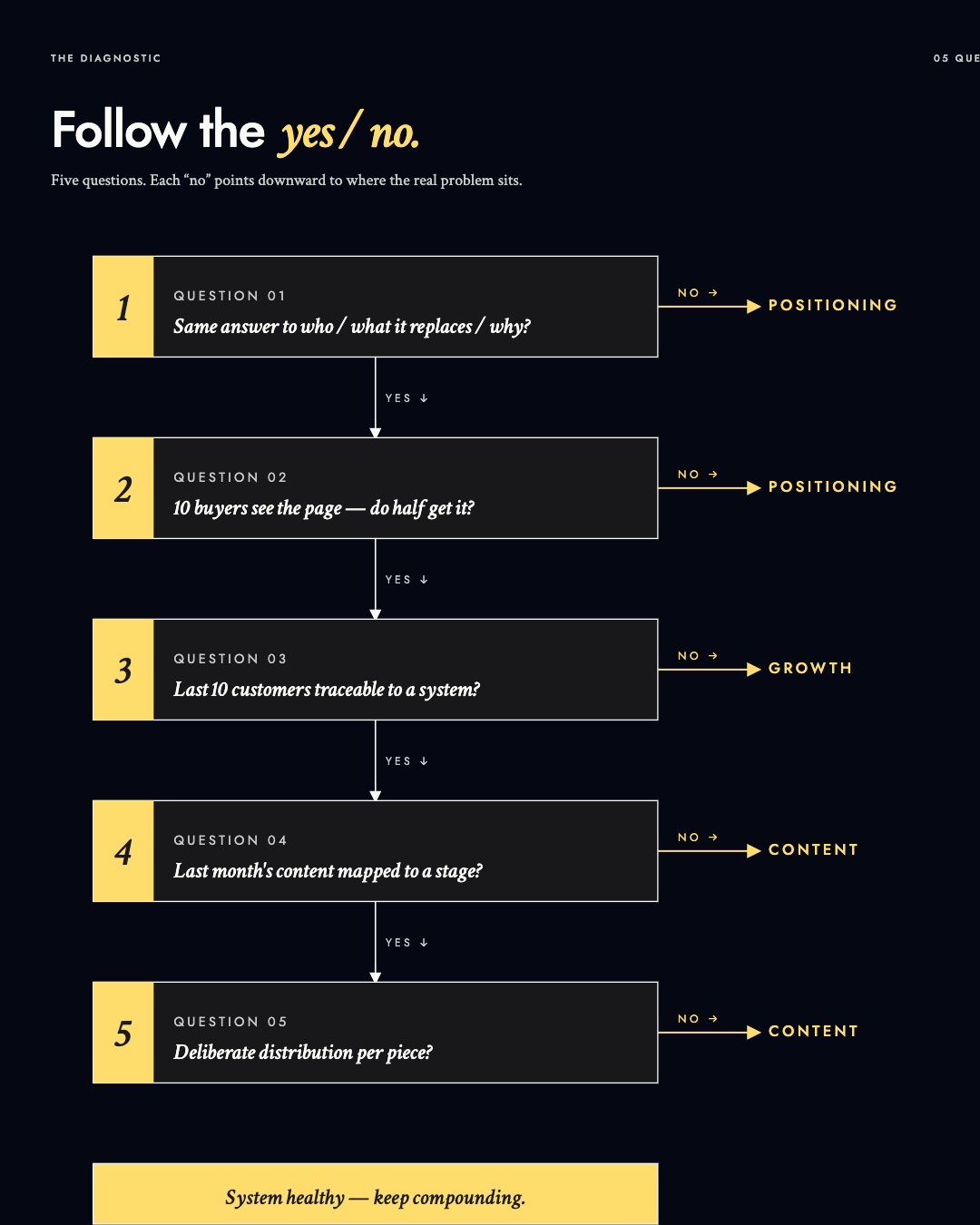
1. Can your team describe who the product is for, what it replaces, and why the buyer should care, and does everyone give the same answer?
If the answers vary depending on who you ask, positioning is not settled. Everything downstream of that, every channel, every campaign, every piece of content, is working from a different version of the truth.
2. If you showed your landing page to ten people in your target market, would more than half immediately understand what the product does for them?
If not, the messaging is not doing its job. The product may be clear to the team that built it, but clarity on the inside does not mean clarity on the outside, and the landing page is where that gap becomes visible.
3. Can you trace your last ten paying customers back to a system rather than individual effort or personal introductions?
If every customer came through the founder’s network, a personal referral, or a one-off campaign that someone manually ran, the business does not have a growth system. It has a collection of moments that happened to convert.
4. Can you map each piece of content you published last month to a specific buyer stage and explain what it was supposed to produce?
If the answer is no, content is being created based on a calendar rather than a strategy. Volume without intent is what turns content into a cost center that the team eventually stops believing in.
5. Does your content reach the intended audience through a deliberate distribution process, or does it get published and sit there?
If distribution is not built into how content gets planned and produced, then even the right content for the right stage will not reach the people it was made for. Publishing is not distribution.