· Growth Engineering · 14 min read
How to Build a B2B Outbound System That Doesn't Rely on Cold Spam
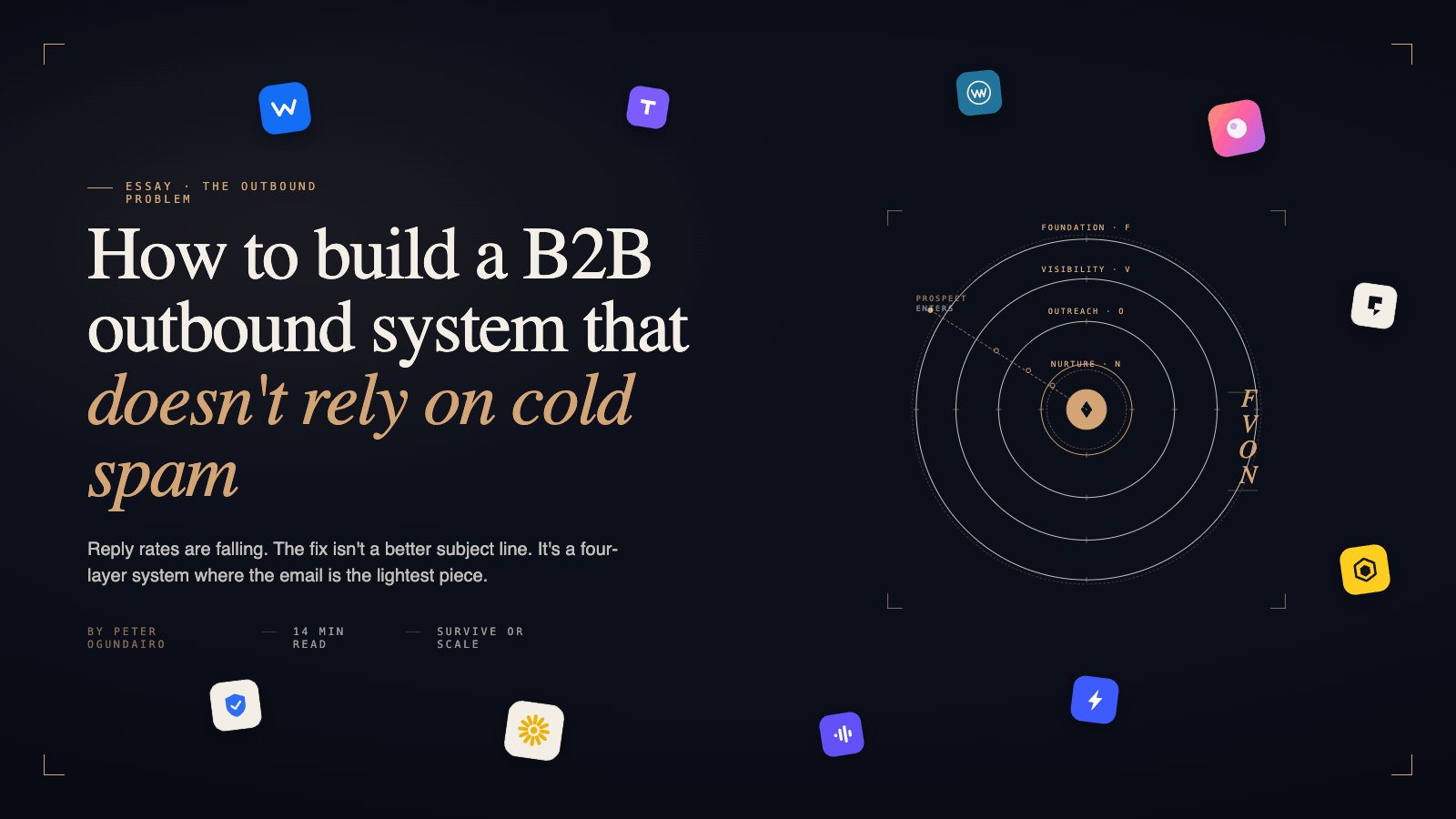
Cold outbound is failing because the email is being asked to do the work of an entire sales conversation. This post breaks down a four-layer system where the email is the lightest part, not the hardest-working one.
You send 200 cold emails, get two replies, and both are negative. The setup was clean, the list was researched, the sequence had three follow-ups with a casual breakup email, and the subject lines were tested. You did everything right, and the inbox stayed empty.
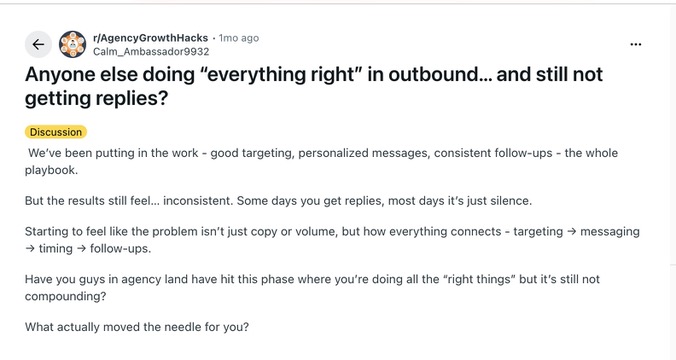
This is happening while outbound is everywhere. The tools are better, the setup is easier, and more teams are running cold email than ever. The promise is that any team with a budget and a list can run pipeline like the best SDRs in the world, and a lot of teams are running with it.
The data tells the real story. Instantly's 2026 benchmark report, drawn from billions of cold emails, shows reply rates falling from around 7% in 2023 to 5.1% in 2024 to 3.43% in 2025. The average rep now sends 344 cold emails to book a single meeting.
I've worked across enough outbound setups to know what happens next when the results don't come.
The instinct is to rewrite the cold email, tighten the hook, try a different subject line, test more variations. Next week's reply rate looks like last week's, because the assumption underneath is that the message is the problem. It isn't.
The message is doing the best it can with what it's been given. The real problem is what the message is being asked to do. In this post, I break down why cold email results are dropping, how to set up a working outbound system, and the five mistakes I've seen quietly kill reply rates.
Why your cold outreach isn't getting replies
The reason the cold email is carrying so much weight is that most outbound is built on a model that was never designed for it. The model comes from direct response advertising, where one message produces one action: the buyer sees an ad, clicks, and converts.
That works because the buyer chose to be there, is already looking for a solution, and the trust barrier is low.
Cold outbound borrowed that logic but applied it to a completely different situation. The buyer did not ask to hear from the sender, has no context on who is writing, and no reason to act on a single message from a stranger. The model asks for a decision at a moment when the buyer has almost nothing to base a decision on.
This is not a copywriting problem. It is a model problem, and it shows up in three places.
There is nothing behind the email
When a cold email is good enough to get the prospect's attention, they do what any buyer does. They check who sent it. They look at the sender's LinkedIn, visit the website, and try to figure out in 30 seconds whether this person is worth their time.
This is a compressed version of what B2B buyers do across an average of 60 touchpoints before they engage with a sales rep.
If the LinkedIn is sparse, the website is thin, and there is no published thinking to evaluate, the prospect moves on. Not because the email was bad, but because there was nothing behind it to back up the claim it made. The email opened a door and the prospect walked through it into an empty room.
The buying process is longer than the sequence
The direct response model assumes the buyer can decide from a single interaction. B2B buying does not work that way, and the gap has been widening. Buyers complete roughly 70% of their decision-making before they ever speak to a sales rep, buying committees have grown to nearly 12 people, and the average sales cycle has stretched to 11 months.
67% of B2B buyers now say they prefer a rep-free buying experience entirely. The prospect who receives a cold email today might not be ready to reply for three months. If the only system in place is the email sequence, that prospect is gone the moment the sequence ends.
There is no mechanism to stay visible, build trust over time, or re-enter the conversation when their timing changes.
The inbox is working against you
There is a third layer underneath the model problem. Every team running the same direct response playbook makes everyone else's outbound harder. More emails in the inbox means lower attention per email, and stricter spam filters mean more messages never arrive.
The average prospect now receives over 100 sales emails per week, and only 5% of cold email senders personalize every message. The other 95% are training buyers to treat cold outreach as noise, and the tooling that makes it easy for any team to run sequences is the same tooling that has flooded inboxes to the point where standing out through copy alone is no longer realistic.
This is not something an individual sender fixes with a better subject line or a cleaner list. The environment has shifted, and a model that worked when fewer teams were doing cold outbound does not survive at the volume it has reached today.
What this means
The diagnosis comes down to one thing. Cold outbound built on a direct response model asks a single email to do what a relationship is supposed to do. When it worked, it worked because inboxes were quieter and the competition for attention was lower. Those conditions are gone, and what replaces the model is a system where the email is supported by everything around it.
That is what the next section breaks down.
The 4 layers of a working outbound system
What replaces the direct response model is a system where the email is not doing the work alone. Four layers, each with a specific job: Foundation, Visibility, Outreach, and Nurture. The prospect can enter at any point and move between them. By the time an email lands, the prospect has already encountered the sender's thinking somewhere else. The email is not cold anymore.
The foundation: what exists before the first email is sent
The foundation is what a prospect finds when they check who sent the email. It could be a full website with a blog, a portfolio, and case studies. It could be a single well-built landing page with a few published articles. It could be a strong LinkedIn profile with a body of posts that demonstrate thinking.
The format depends on where the company is, and what matters is that something exists behind the outreach that answers the prospect's first question: is this person worth my time and can I trust them? If the answer is an empty room, nothing published, no visible thinking, no proof of work, the prospect moves on regardless of how good the email was.
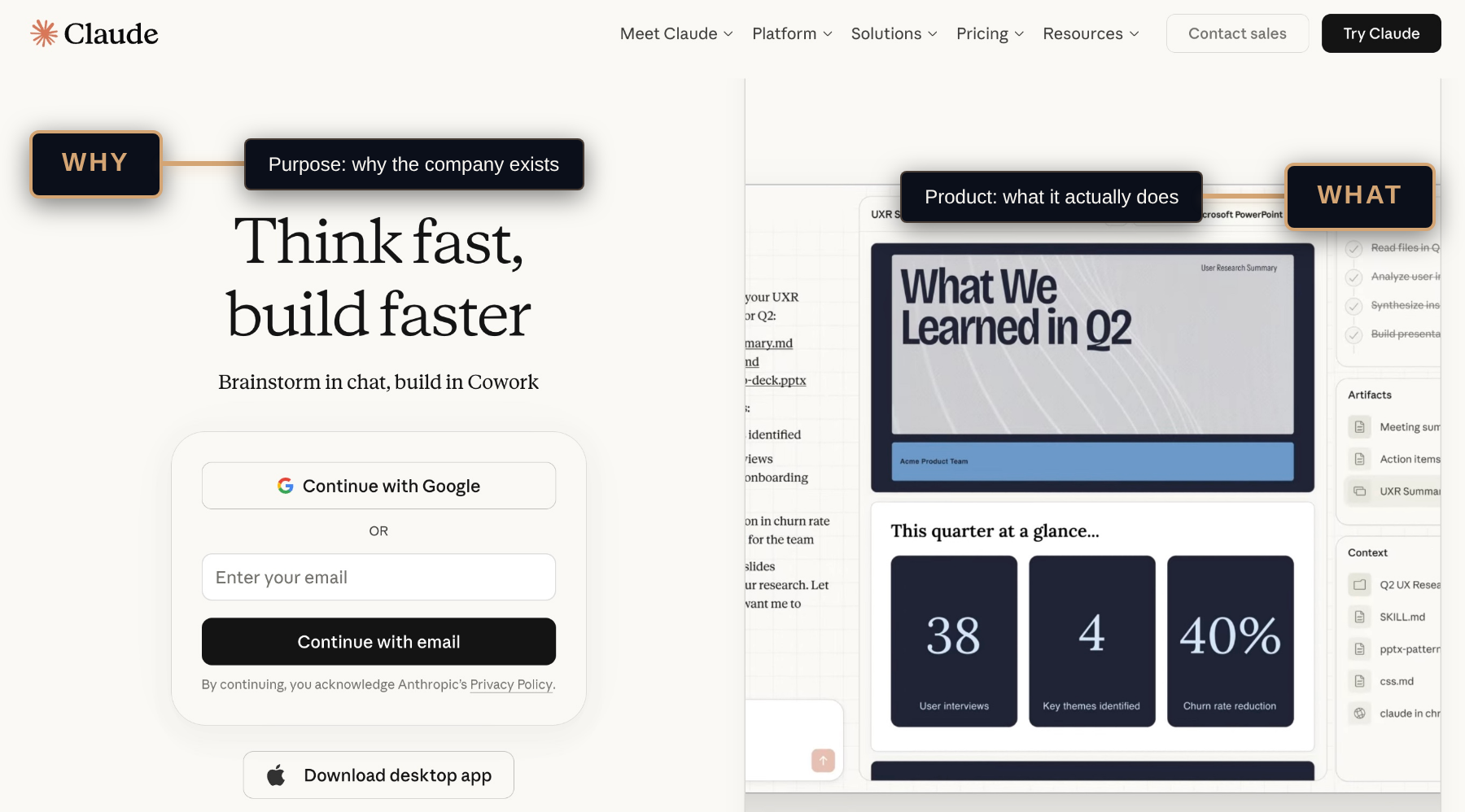
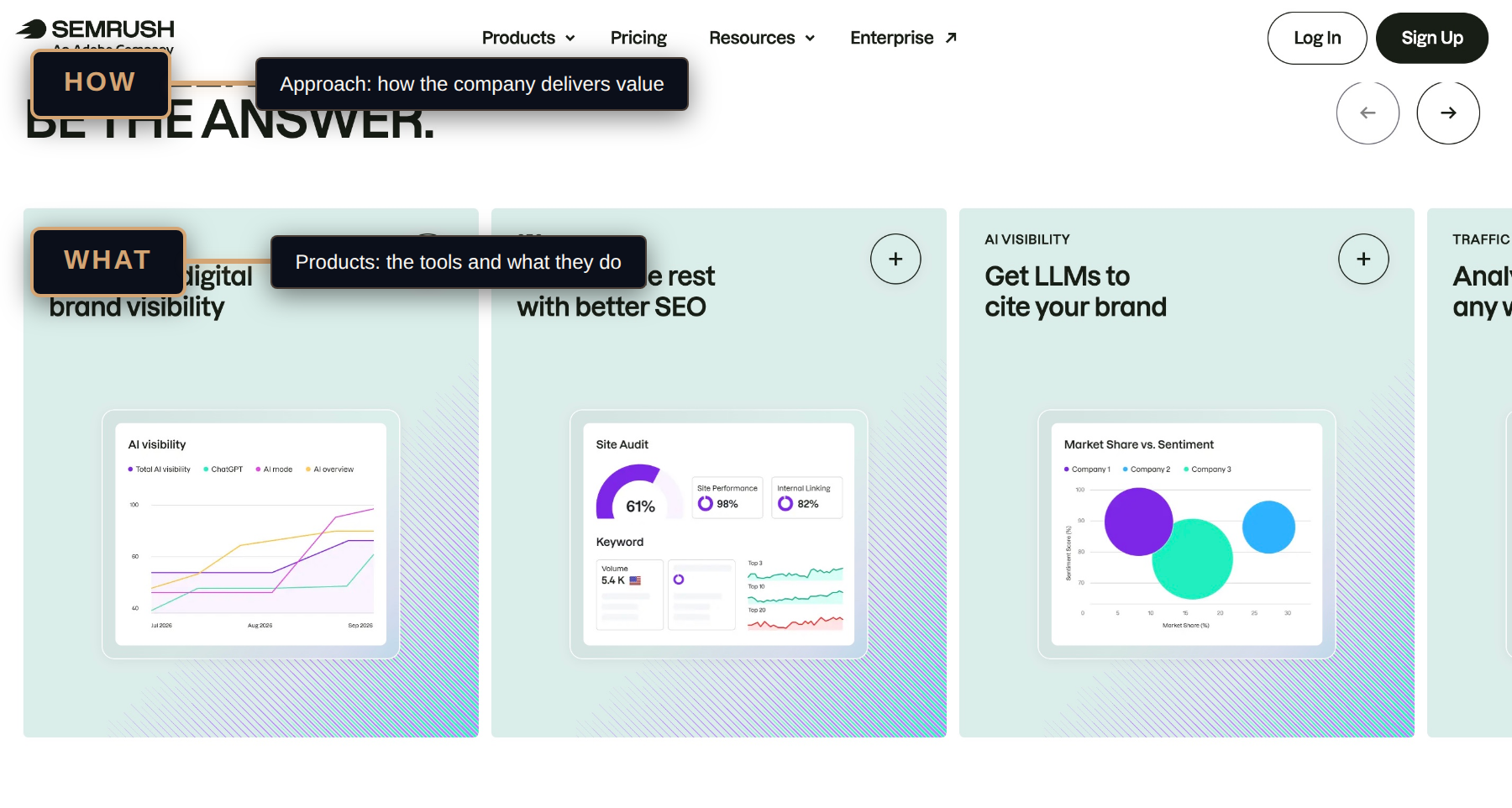
The email opened a door and there was nothing on the other side. My favorite way to think about a strong foundation is Simon Sinek's ‘Why, How, What’ framework, and I'll explain what he had to share below:
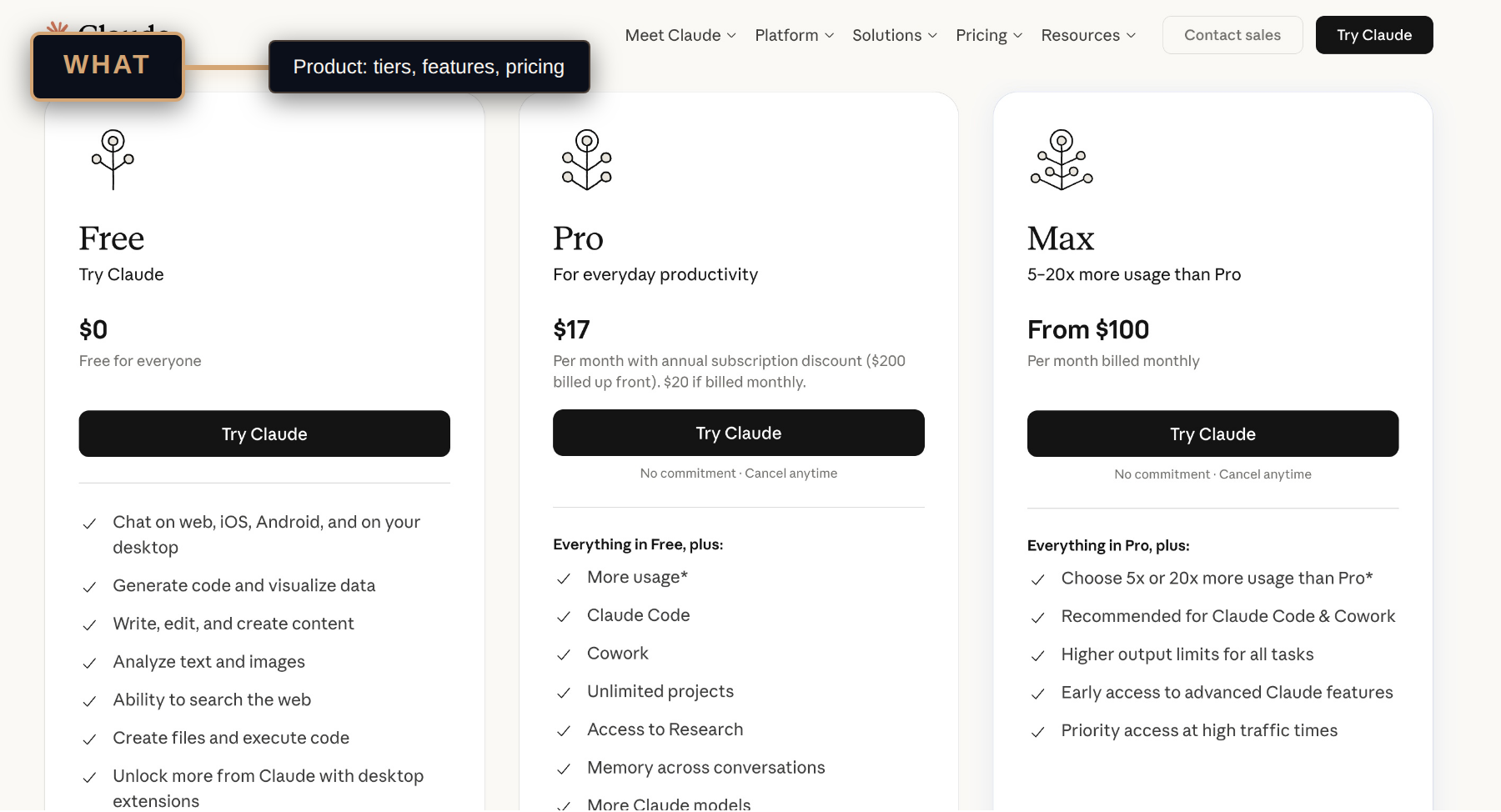
Most teams build their website starting with the ‘What’, which is: here is what we sell, here are our features, and here is our pricing. Every company knows its ‘What’, and most companies only communicate that. The result is a website that reads like a brochure as it describes the product, but gives the prospect no reason to care about the company behind it.
Sinek's argument is that the companies that connect with people start with the ‘Why’ instead.
- Why does this company exist?
- What problem does it care about solving, beyond making money?
- What impact is it trying to have?
The ‘Why’ is the thing that makes a prospect stop scrolling and think, “these people understand my situation.” It shows up on the landing page and the about page, not as a feature list, but as a purpose the prospect can connect with before they evaluate anything else.
The ‘How’ is the principles that guide the work. Not what the company delivers, but how it operates and what makes its approach different. This is where the methodology, the values, and the working style live. A prospect reading the ‘How’ moves from “interesting” to “I can see why this would work differently from what I have tried before.”
Lastly, the ‘What’ is the product, the services, the deliverables. It matters, and it belongs on the site. But when the ‘What’ is all a website communicates, the prospect has nothing to anchor their trust to. They know what you sell, but they do not know why you sell it or how you think about it. That gap is the difference between a website that converts after a cold email and one that gets closed in 10 seconds.
A strong foundation layers all three. The prospect lands, encounters the Why (this company understands my problem), reads the How (their approach makes sense), and evaluates the What (here is what they actually deliver). By the time they reach the What, they already have a reason to care about it.

Not every company has all three layers built on day one. But the minimum viable foundation is a clear page that communicates the Why, plus at least one piece of published thinking that demonstrates the How in practice. Without those two things, outbound has nothing to point to.
The difference between a weak foundation and a strong one shows up in what the prospect experiences after clicking through:
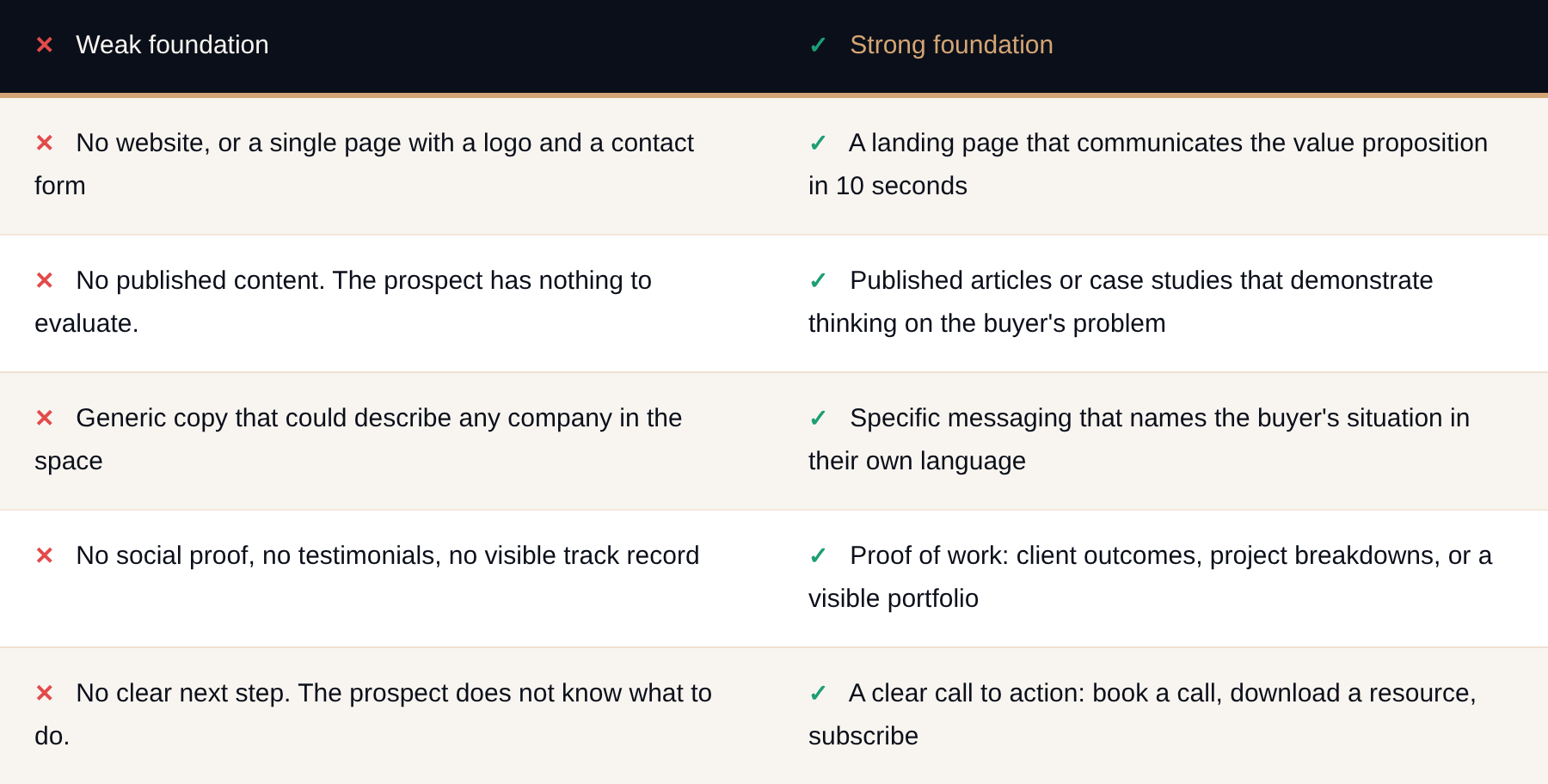
The right column is the minimum. A clear landing page that communicates the Why, paired with published resources that demonstrate how the company thinks about the problems the buyer is dealing with. That is what answers the question every buyer asks after receiving outreach: is this person worth my time?
It is also important to note that the strongest foundations extend beyond the landing page into published thinking that gives the prospect something real to evaluate. This could be a blog post that diagnoses a challenge they recognize, a case study that walks through a real engagement, a template or framework they can use before they ever speak to anyone.
These are not content for content's sake but proof, published in advance. They show that this company has done the thinking the prospect is paying for, and can be trusted.
The visibility: showing up where they already look
The visibility layer is wherever your buyers already spend time. For most B2B companies, that is LinkedIn. For others, it could be X, Slack communities, niche forums, or YouTube. The platform matters less than the principle.
The thinking that lives on the website gets broken into smaller pieces. Those pieces get published where your buyers are already paying attention. If the foundation builds trust at depth, the visibility layer builds familiarity at scale.
Since LinkedIn is the most common visibility channel for B2B, that is where I will focus here.
A prospect who has seen three LinkedIn posts from you in the last month already knows your name. When your cold email arrives, it does not land as outreach from a stranger. It lands as a message from someone whose thinking they have already encountered. The trust barrier drops before the email is even opened.
The visibility layer also creates a second entry point. Not every prospect will open a cold email. Some will find you through a LinkedIn post, click through to the website, and enter the pipeline without outbound ever touching them.
Others will see a LinkedIn post after ignoring a cold email. The post does what the email could not. The visibility layer does not replace the outreach layer. It makes the outreach layer work harder by closing the gap between stranger and familiar.
The outreach: opening the conversation
The foundation gives the prospect a reason to trust. The visibility layer makes them familiar with your name before you reach out. Without those two layers in place, outreach is a cold message from a stranger asking for time. With them in place, outreach becomes the lightest part of the system.
There are several outreach tools out there such as Apollo, Instantly, Lemlist, Smartlead, or even LinkedIn outreach done manually. The tool matters less than what the outreach is being asked to do, and in this system, it is asked to do two things: find the right people, and open a conversation with them.
Building the target list
A lot of outbound fails at the list before it ever fails at the message. This is because teams export thousands of contacts filtered by industry, title, and headcount, then send the same message to all of them. The list is wide, the targeting is shallow, and the reply rate reflects it.
A good list is narrow and intentional. It starts with the buyer profile, not the tool filters.
- Who specifically has the problem your foundation addresses?
- What companies are at the stage where that problem is urgent?
- Which person at that company is feeling the pain and has the authority to act on it?
Several outbound tools make it easy to filter by firmographics. That is useful, but it is the starting point, not the finish line. The next step is layering in buying signals that suggest the prospect is actually in-market right now.
These include things like recent hiring activity in the area you serve, a new funding round that creates budget, a job posting that reveals a gap in the team, or a LinkedIn post where the prospect described the exact problem you solve.
A list of 200 prospects where you can explain why each one might care right now will outperform a list of 5,000 where you cannot.
Writing the outbound sequence
A highly effective outbound campaign is rarely a single email. It is a sequence of messages over days or weeks, and the principles that apply to the first message apply to every message in the sequence. Each one has a slightly different job.
The first message is the lightest. It does not try to build credibility, present a value proposition, and ask for a meeting in five sentences. It does one thing: it names the prospect's situation and gives them a reason to look closer.
A strong opening message does three things. It names the prospect's situation in one or two sentences. It points to a piece of evidence relevant to that situation, whether that is a case study, a client result, a framework, or something the prospect can evaluate on their own.
The third thing it does is close with a low-commitment question. Not a meeting request, not a calendar link. Something the prospect can respond to without feeling like they are entering a sales process.
The follow-up messages should build on the first without repeating it. The second might share a different piece of evidence. The third might reference something the prospect recently posted or published. The fourth might be a simple check-in that gives the prospect an easy way to say “not now” or “not interested.”
Each message adds a new reason to engage rather than restating the original pitch. This matters because follow-up emails generate 42% of all campaign replies, yet nearly half of senders never send a second message.
The sequence is not a pressure campaign. It is a series of small, relevant touches that give the prospect multiple chances to engage on their own terms. If the foundation and visibility layers are doing their job, the prospect is encountering the sender's thinking between emails, which makes each follow-up land warmer than the last.
The email is the door, not the room, and when the sequence carries less weight, each message reads shorter, feels more human, and is harder to ignore. The prospect clicks through, finds the evidence, and evaluates on their own time.
The nurture: staying visible until timing aligns
The first three layers work together to open conversations. Sometimes the timing is right and the prospect responds immediately.
Most of the time, it is not. The prospect might be interested but mid-contract, mid-fundraise, or simply not ready to act this quarter. The problem is not a lack of interest. It is a lack of timing, and the direct response model has no answer for this. The sequence ends and the prospect disappears.
The nurture layer solves this. It keeps the prospect in orbit through content they chose to receive, delivered at a pace that respects their timeline instead of pushing yours. There are several ways to do this depending on the business and the audience. Some popular options are:
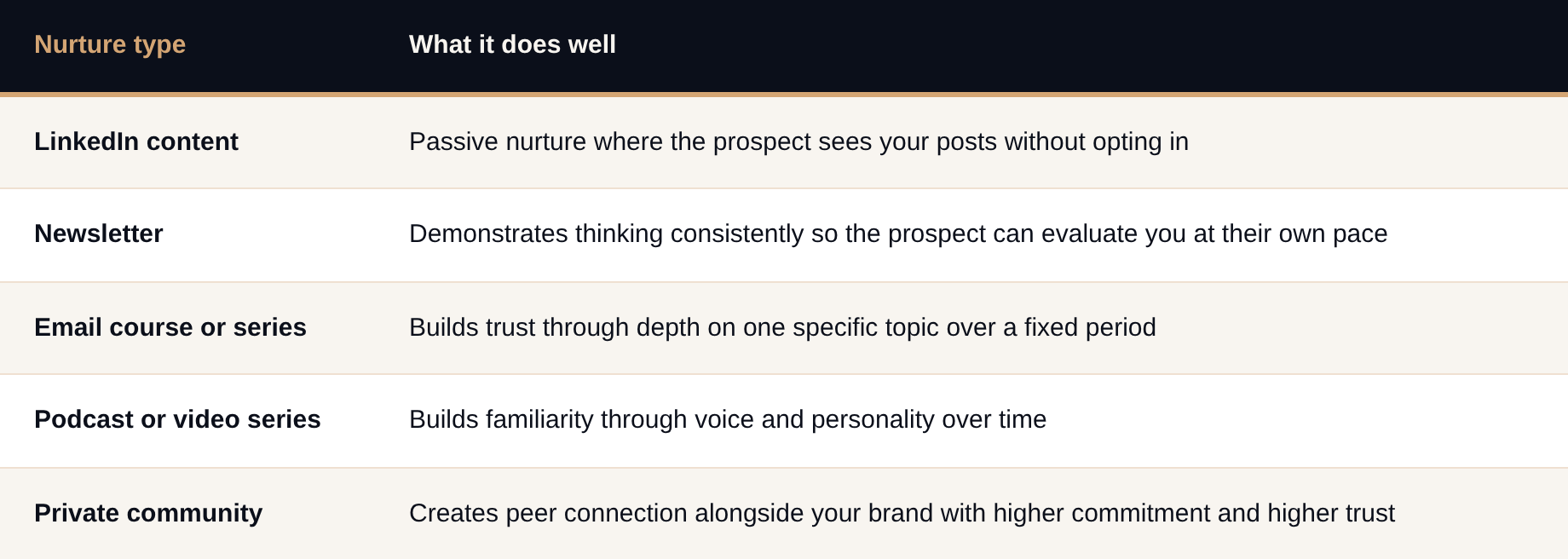
The format matters less than the principle. The prospect stays in your orbit, encounters your thinking regularly, and converts when their timing aligns. Some will reach out on their own after months of reading. Others will respond to a second outreach message that now lands warm instead of cold.
The nurture layer is fed by the other three.
A prospect who visited the foundation but did not convert subscribes to the newsletter. A LinkedIn connection from the visibility layer opts in after seeing a few posts. An outreach prospect who replied “not right now” gets added with their permission. Each layer feeds the nurture, and the nurture keeps every prospect warm until the next opportunity to re-engage.
The system does not lose people but holds them.
How the layers connect
No single layer works in isolation. The foundation without the visibility has depth but no reach. The visibility without the foundation has familiarity but nothing to back it up. The outreach without the foundation and the visibility is the direct response model this entire section argues against.
The nurture without the other three has nothing to nurture.
The system compounds because each layer feeds the others. A LinkedIn post drives traffic to a foundation article. The foundation article earns a newsletter subscriber. The newsletter subscriber gets an outreach message three months later and it reads like a follow-up, not a cold pitch.
An outreach recipient clicks through to the website, reads the foundation content, follows on LinkedIn, and enters the visibility layer. Every touchpoint strengthens the next one instead of existing on its own.
This is the structural difference between running outbound and building a system. Running outbound is sending emails and hoping. Building a system is creating the conditions where every email lands in context, supported by everything around it.
5 outbound mistakes that quietly kill reply rates
The system described above works when all four layers are in place and connected. It breaks in specific, predictable ways when they are not. These are the five mistakes I see most often, and they are quiet because they do not produce obvious errors. They produce silence.
1. Building the list on firmographics alone
Filtering by industry, title, and headcount gets you a list of people who match a profile, but it does not get you a list of people who are in-market right now. The difference between a list that produces replies and one that does not is rarely the size. It is whether the people on it have a reason to care this week.
The fix is layering in buying signals on top of the firmographic filters. A recent funding round, a new hire in the area you serve, a job posting that reveals a gap, or a LinkedIn post where the prospect described a problem you can solve. These signals turn a static list into a timed one, and timing is what separates outreach from spam.
2. Skipping warmup and sending at full volume
A new domain or a new inbox has no sending reputation, and email providers do not know whether it is a legitimate sender or a spam operation. When a team skips the warmup period and starts sending hundreds of emails from day one, the inbox providers make the decision for them.
The emails land in spam, open rates collapse, and the domain reputation takes damage that can take weeks to recover from.
The warmup process is not exciting. It means sending a small number of emails per day, gradually increasing over two to four weeks, and making sure early recipients are engaging with the messages. It feels like it is slowing things down, and it is the reason the emails that follow actually arrive.
3. Making every follow-up a restatement of the first email
The first email did not get a reply, and sending it again with slightly different words will not change that. The prospect saw the message, evaluated it, and decided not to respond. Repeating the same pitch in a softer tone does not give them a new reason to engage.
Each follow-up should add something the previous message did not.
A different piece of evidence, a reference to something the prospect recently published, a new angle on the problem, or a simple check-in that makes it easy to say “not now” without pressure. The sequence should feel like a series of different reasons to engage, not the same reason said five different ways.
4. Not connecting the campaign to the rest of the system
The outreach runs on Apollo. LinkedIn posts go out on a separate schedule. The website has content that nobody in the outreach sequence ever links to. Each channel operates on its own, and the prospect who encounters one never sees the others.
This is the most common version of the system failing.
All four layers might exist, but they are not connected. The outreach email does not point to the foundation content, the LinkedIn posts do not reference the same topics the outreach is covering, and the prospect who checks the sender's profile finds posts about something completely different.
The system has pieces but no architecture.
The fix is simple in principle and requires discipline in practice. The outreach message should point to a specific piece of foundation content, and the LinkedIn posts during the campaign period should cover the same territory the outreach is addressing.
The prospect who moves between layers should encounter a consistent thread, not disconnected fragments.
5. Not staying consistent with nurture
The newsletter launches and the first two issues go out on time. The third one is late. The fourth one does not ship at all. LinkedIn posts slow from three a week to one every other week, and the nurture layer that existed in theory has gone quiet in practice.
This is where most systems lose the long game.
The prospect who subscribed three months ago and received consistent content is warm. The prospect who subscribed three months ago and heard nothing for the last six weeks has forgotten. Inconsistency does not just reduce the effect of the nurture layer. It erases it.
The fix is not publishing more but publishing at a pace that is sustainable long-term and never dropping below it. One newsletter a month is better than four in the first month and none after that. Two LinkedIn posts a week is better than daily for three weeks and then silence. The nurture layer runs on consistency, and consistency is a commitment, not a burst.
What this comes down to
Cold outbound built on a direct response model asks a single email to do what a system is supposed to do. The email carries the credibility, the value proposition, the trust-building, and the ask, all in a few sentences from a stranger. That worked when inboxes were quieter. It does not work now.
The replacement is not a better email. It is a system where the email is the lightest layer, supported by a foundation the prospect can evaluate, a visibility layer that makes them familiar before the email arrives, and a nurture layer that keeps the conversation alive until the timing is right.
The four layers are not complicated. They take discipline to build and consistency to maintain, and the teams that build them will have a structural advantage over the ones still optimizing subject lines.
If this is the kind of system you want to build, I would be happy to talk through how it applies to your specific situation.